Creative Development & Writing
Three approaches to original short-form programming, from format development and collaborative writing to performance direction, production and distribution.
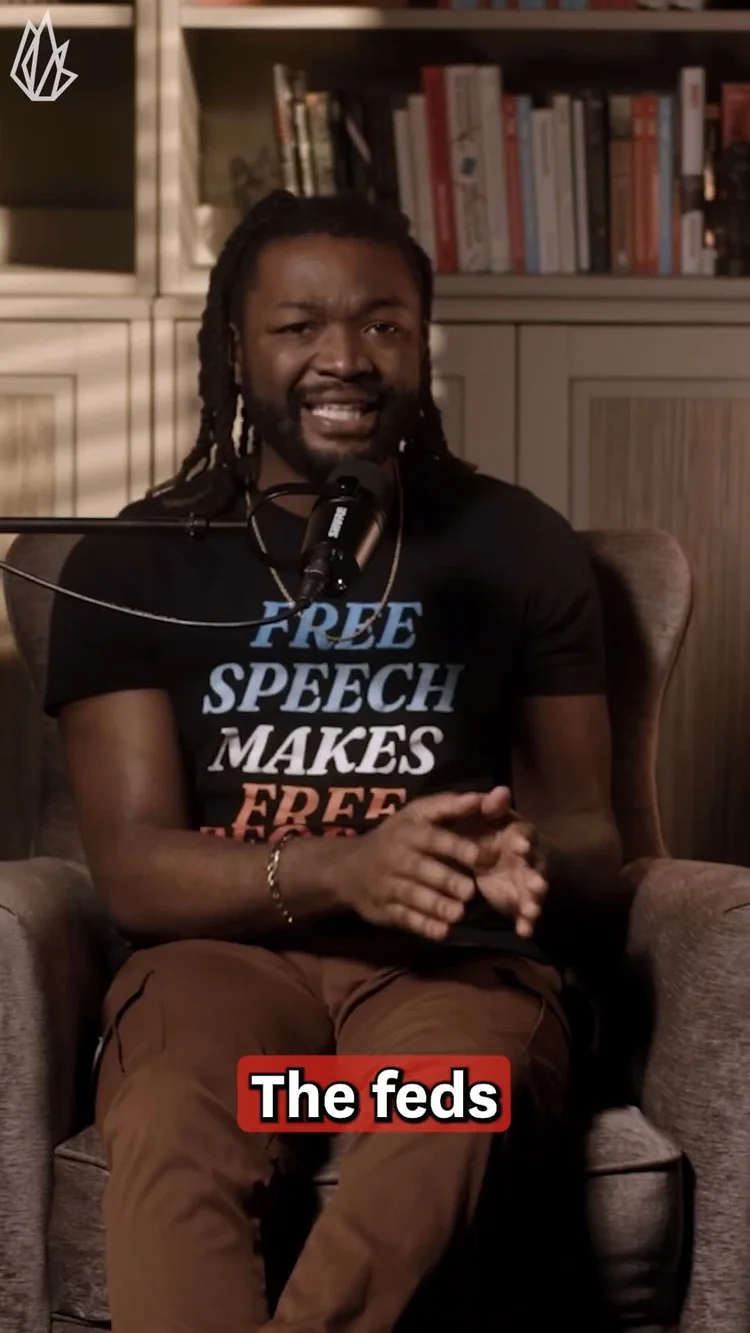
Insane Free Speech Stories
Audience expansion & narrative storytelling
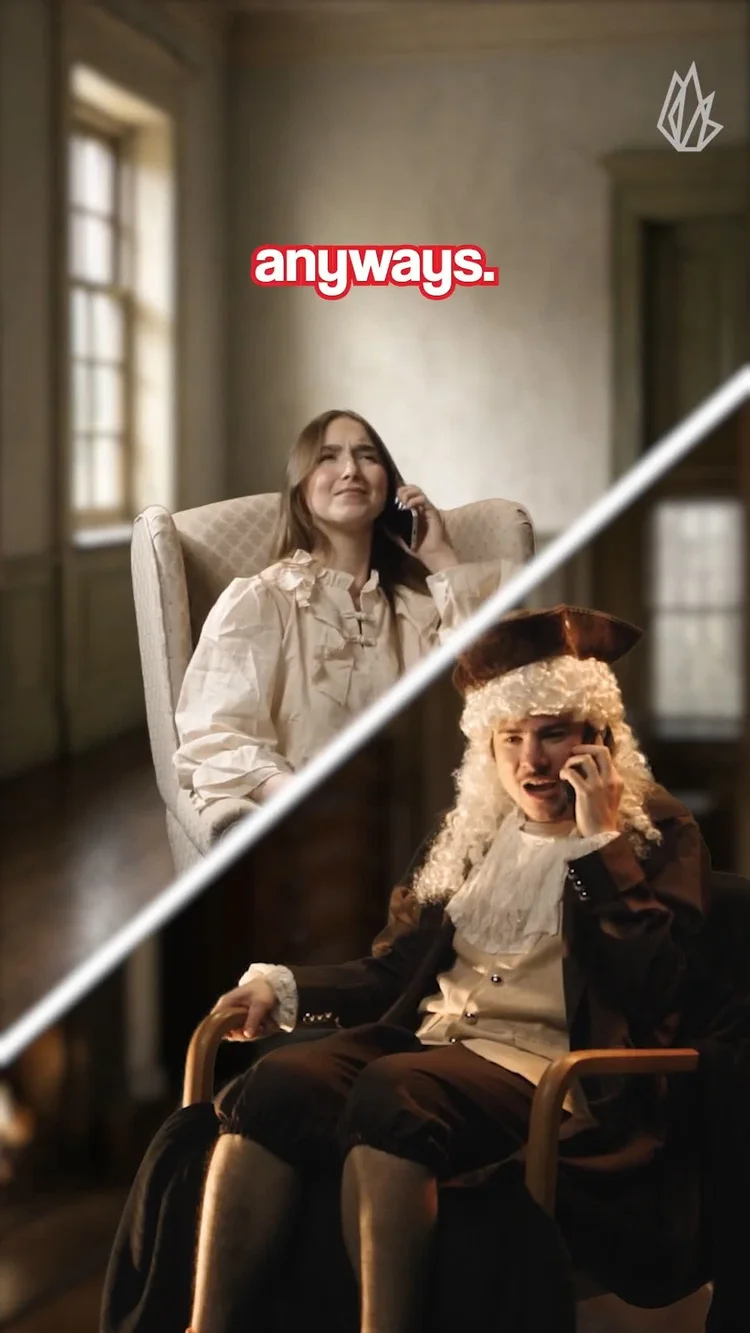
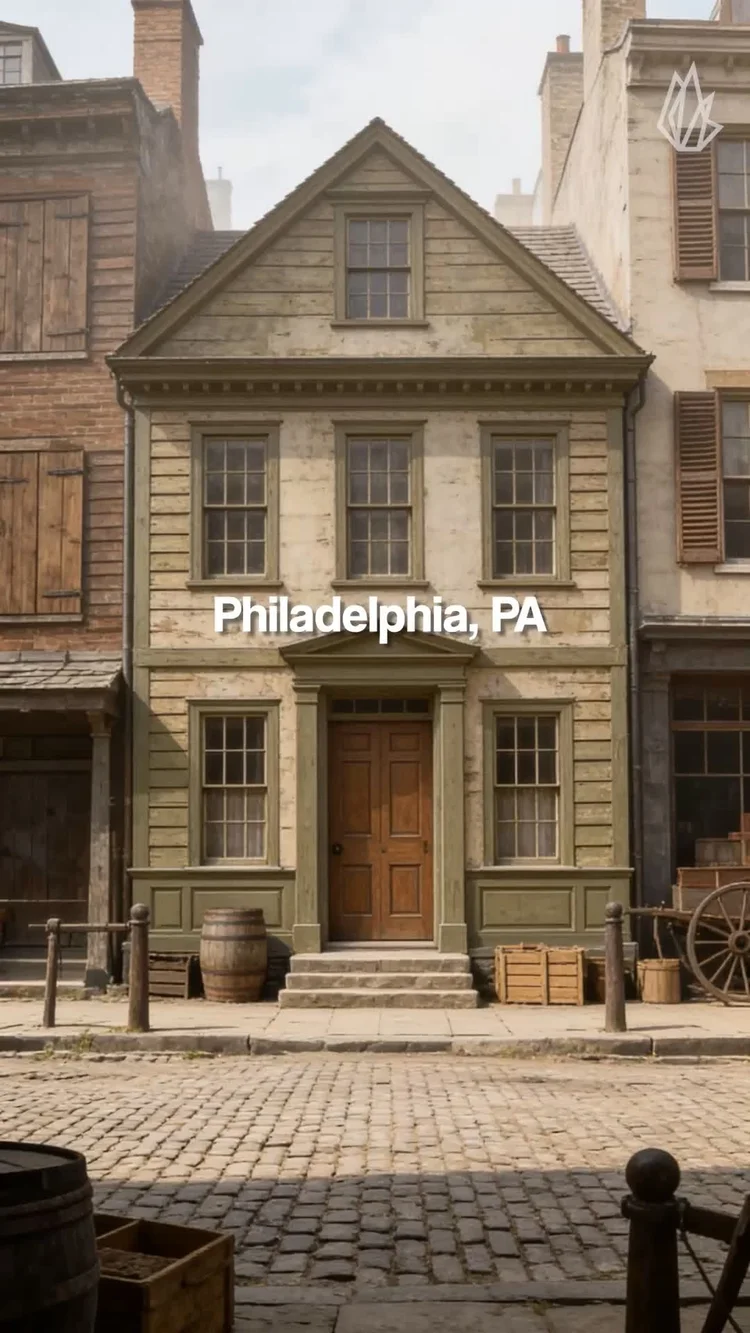
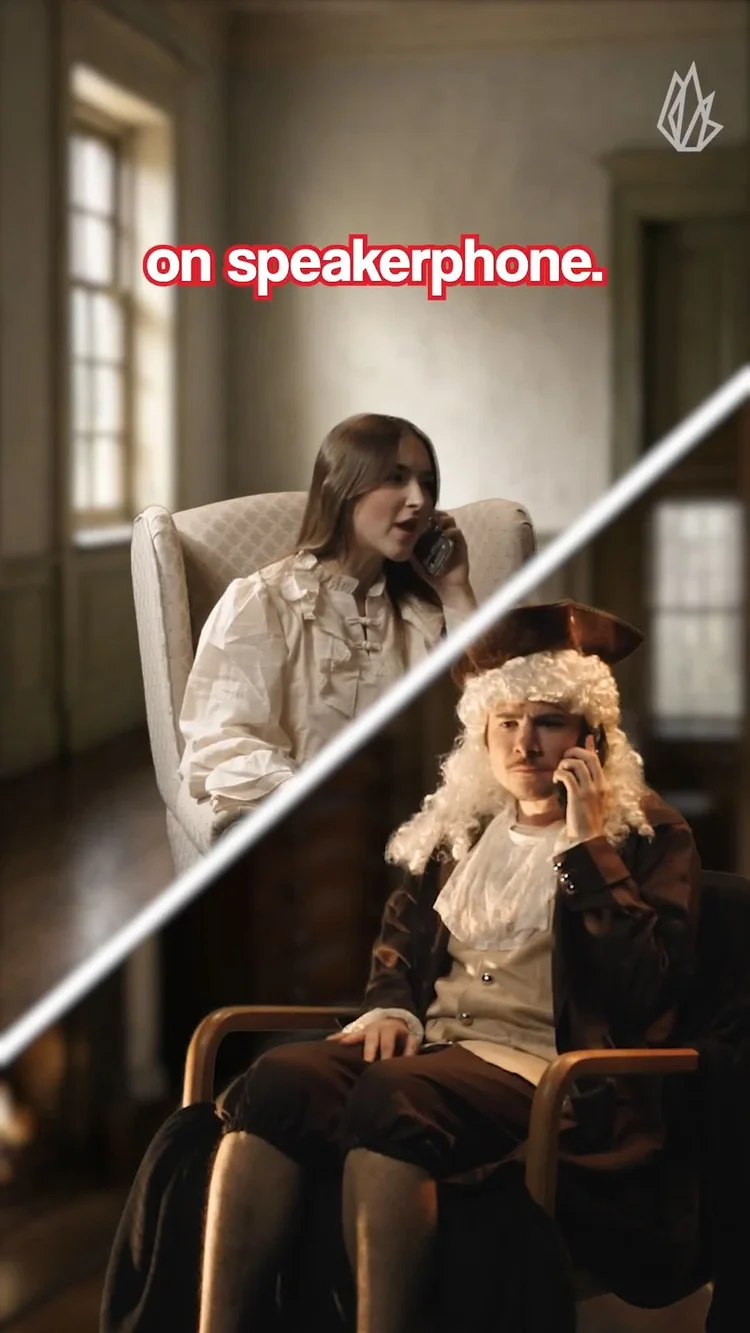
Free Speech Gossip
Creative experimentation & audience segmentation
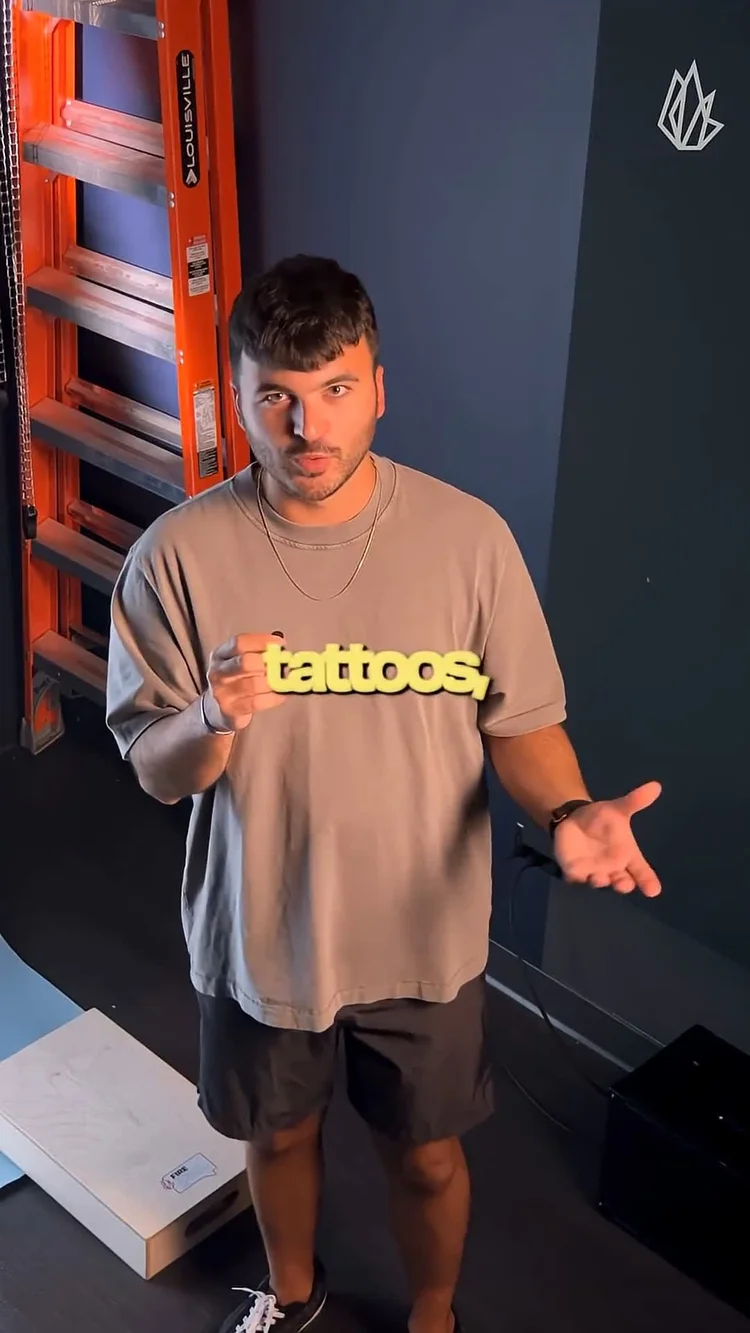
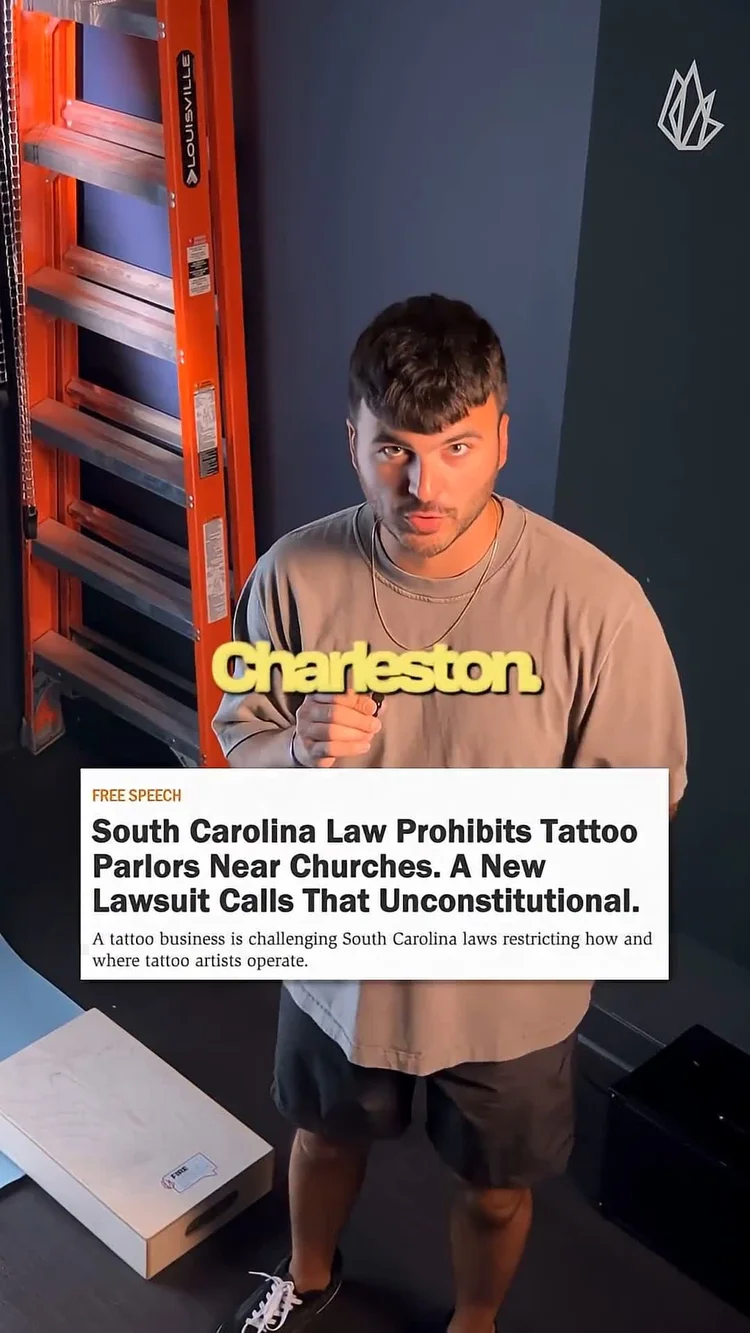
Angry Bobby
Audience analytics & performance-driven writing
Insane Free Speech Stories
Audience expansion & narrative storytelling
Creative objective
Reach younger social audiences, including viewers who would not ordinarily seek out legal or historical content. Success was measured by expansion beyond the established demographic and geographic audience.
Editorial voice
I developed the format around the natural voice of a 24-year-old presenter. Contemporary slang, irreverence and profanity were deliberate creative choices, not incidental embellishments.
Writing & direction
Our team researched and pitched episode treatments before collaboratively developing scripts. On set, we preserved key story beats while allowing improvisation and rewriting to keep the performance authentic.
Production & results
A repeatable research, scripting and production workflow enabled batches of eight episodes in five to seven business days.
Writing Samples
Written collaboratively with members of the production team. I participated in the writing process and held final creative approval before production. Original working text reproduced for portfolio review; not a claim of sole authorship.
This Song EXPOSED the Government — View Script
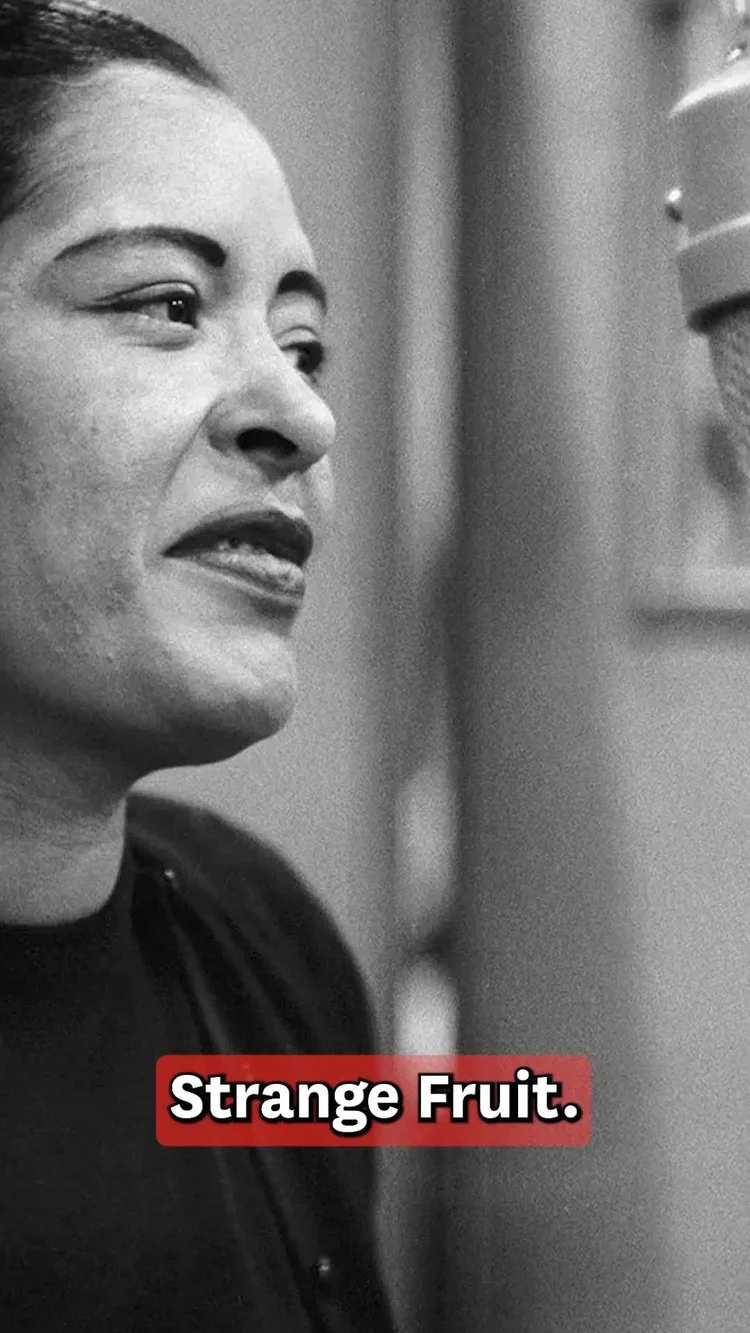
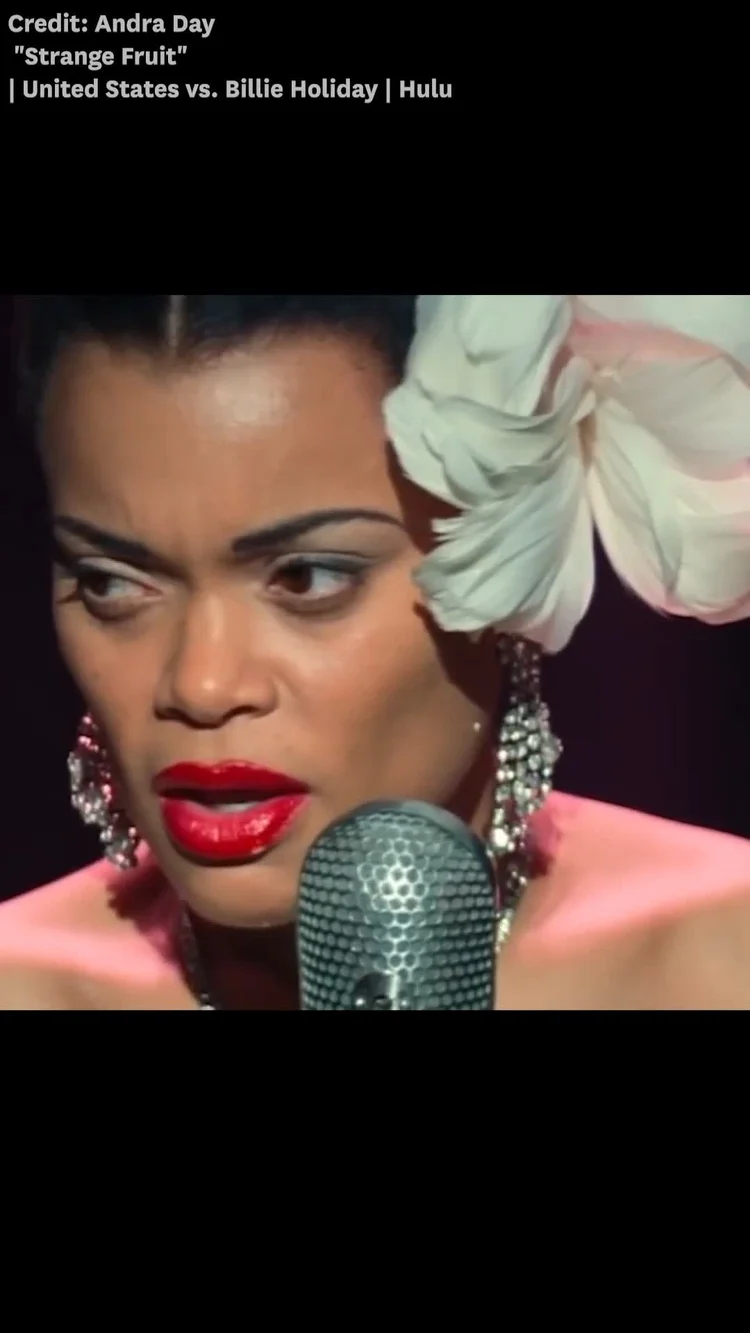
Billie Holiday
“How far do you think the U.S. government would GO… to stop a SONG!”
“In 1939, Billie Holiday started performing Strange Fruit — a heavy song describing the horror of lynchings in America.
“During that time, black artists were expected to shut up and sing — obviously avoiding anything even close to political. Then Billie gets onstage and starts singing about racial terror in front of white people… during Jim Crow. Savage.”
“The Feds hated it— not the lynching part, apparently that was cool — but a singer making them look like assholes?
Yeah, that’s where they drew the line.”
They ordered her to stop singing the song, intimidating her for years, sending agents to stalk her, raid her shows, and threaten the clubs that book her. But Billy just kept singing.
“So the head of the Federal Bureau of Narcotics, this dude named Harry Anslinger, decides Billie Holiday is now ‘public enemy number one.’
“Again— the song about lynching— the lynching itself is fine apparently, but song gotta go…”
“When going after her message failed, they went after her character. They knew Billie was struggling with addiction issues, so they arrested her on some drug charges, and refused to give her any kind of treatment.
Billie Holiday, one of the most famous artists of all time, died handcuffed to a hospital bed — all because she wouldn’t stop singing Strange Fruit.”
“It’s tragic — but even after all that, they lost. Strange Fruit still gets plays today and it's been sung by some of the biggest names in music, from Nina Simone to Diana Ross. This song reminds us of everything they didn’t want us to know: including the fact that free speech makes free people.”
B-roll references
- https://www.youtube.com/watch?v=bckob0AyKCA&list=RDbckob0AyKCA&start_radio=1
- https://classicalbumsundays.com/album-of-the-month-billie-holiday-lady-in-satin/
- https://en.wikipedia.org/wiki/Harry_J._Anslinger
- https://www.esquire.com/entertainment/movies/a35622823/united-states-vs-billie-holiday-true-st
- https://www.imdb.com/name/nm0030645/news/
- https://shuddhashar.com/billie-holiday-and-the-war-on-drugs/
- https://www.britannica.com/biography/Billie-Holiday
The Chilling Story of Victor Jara — View Script
Víctor Jara
They tortured a musician because his music gave people hope.
This is the story of Victor Jara.
Víctor was a Chilean singer & songwriter. His music gave a voice to communities that were usually ignored. And because of that, people listened.
In 1973, Chile’s elected government was overthrown by the military. The new regime immediately began targeting universities because they were hubs for dissenting ideas that would challenge the military.
Universities also happened to be a common place for Victor to perform and speak to students who wanted to listen to his ideas.
On one of the days he went to campus to visit, the military came to round up students and faculty at gunpoint and turned their stadium into a detention center,
When the gunmen recognized Victor. They tortured him and broke both his hands, making sure he would never make music that made people question the military again. And eventually they executed him
He was murdered for being a voice that represented the people, during a time the government wanted its citizens to be powerless.
Victor’s music is still sung. His words are still remembered. And his story — along with the countless others lost — is a reminder that authoritarian power fears one thing above all else: people’s voices.
Because free speech makes free people.
Socrates Was Executed For Seeking the Truth 🧠 — View Script
Socrates
Initial narrative draft
Summary: In 399 BC, Socrates was executed in Athens for “corrupting the youth” with his questions and philosophy. His trial is one of the earliest free speech battles.
Script:
“What if I told you one of the greatest OG philosophers got executed — just for asking questions?”
“In 399 BC, Athens put Socrates on trial for ‘corrupting the youth’ and ‘disrespecting the gods.’ But let’s be real — he was just asking too many f***ing questions.”
“Athens was rebuilding after years of war, and here’s this old dude making their leaders look goofy — asking questions they couldn’t answer.”
“He told his students to chase the truth, even if it meant questioning everything — politics, religion, all of it. In a shaky democracy, that made him dangerous.”
“So they put him on trial. And in court, he stood on business and doubled down.”
“He told the jury one of the hardest lines ever: ‘The unexamined life is not worth living.’
They didn’t love that.”
“The jury voted guilty, and Socrates took it like a boss — drank poison hemlock instead of switching up on what he believed.”
“He was one of the first people ever killed for what he said — for thinking differently out loud. His trial’s a reminder that even in a democracy, truth-tellers aren’t always safe.”
“If you censor what you believe just to be safe, you’re not free.”
“Because free speech makes free people.”
Audio/visual draft
| Audio | Visual |
|---|---|
Did you know one of history’s greatest philosophers was sentenced to death — just for talking too much? In 399 BC, Socrates was put on trial in Athens for ‘Corrupting the youth’ and ‘disrespecting the gods.’ What that really meant was: he asked too many questions. Socrates went around the city challenging powerful people, forcing them to admit they didn’t know as much as they claimed. Fresh out of war and political chaos, Athens saw him as dangerous. So they put him on trial. Socrates refused to apologize. He told the jury: ‘The unexamined life is not worth living.’ Instead of begging for mercy, he dared Athens to value truth over comfort. The jury sentenced him to death. Socrates calmly drank poison hemlock in front of his students. His death showed how far authorities will go to silence uncomfortable ideas. But his defiance became one of the earliest foundations for free thought — and free speech. Free speech makes free people. | Hook: Marble statue of Socrates, quick zooms. Story: Ancient Athens illustrations, scrolls, trial paintings, animated hemlock cup. Punchline: Fade to First Amendment text + his quote (“The unexamined life is not worth living”). Close: Panning of painting of Socrates drinking the poison. |
B-roll references
Free Speech Gossip
Creative experimentation & audience segmentation
Creative objective
Translate historical controversies into contemporary conversational comedy through two time-traveling friends.
Format development
The format combined character-driven dialogue, period costumes and AI-assisted environments. The contrast between historical events and contemporary speech was central to the premise.
Writing & production
Scripts were developed collaboratively, with room for improvisation during performance. Generative imagery supported the visual premise and repeatable production.
Audience-informed decision
Despite positive audience response, the series did not meet its audience growth, engagement and conversion objectives. I discontinued the format rather than continuing to allocate resources on the basis of popularity alone.
Writing Samples
Written collaboratively with members of the production team. I participated in the writing process and held final creative approval before production. Original working text reproduced for portfolio review; not a claim of sole authorship.
Ep. 2: This Congressional Drama Had Us Gagged — View Script
Abolitionist Gag Rule
Major points
- Congress made a rule on May 26, 1836, that all discussions of slavery were immediately tabled
- They tried to solve the slavery debate by pretending it didn’t exist
- Proposed by South Carolina congressman Henry Laurens Pinckney
- John Quincy Adams is pissed, wants resolution withdrawn
- Speaker of the House James K. Polk refused
- JQA: "I am aware there is a slaveholder in the chair!"
- Southern politicians to shout him down, Polk won’t recognize him
- JQA: “Am I gagged, or am I not!?”
- JQA fights until resolution is repealed on December 3, 1844
- Finds ways to bring up slavery
Dialogue
Joe: sophia
Sophia: what
Joe: did you hear about the rule congress just made? They’re trying to ban talking about slavery
Sophia: oh right like not talking about it is gonna make it go away
Joe: Exactly! I mean, I’d love to ban cholera-
Sophia: totally. So what does that JQA think??
Joe: the mutton chop man?
Sophia: mutton chopped that’s the one.
Joe: hates it!!! He is straight up ignoring it. Even asked Speaker James K Polk to repeal it, but you know that’s going nowhere
Sophia: lol isn’t polk literally a slaveholder?
Joe: exactly!!!!!! Business line!
Sophia: so he doesn’t want to talk about his own business. Make it make sense
Joe: FACTS!!!!! And get this…
Sophia: do tell
Joe: the most iconic moment in that stuffy old chamber… JQA said: “Am I gagged, or am I not!?” and i’m like… kinda kinky for kongress!!
Sophia: no Joe I don’t think you’re understanding this... like slavery… like real slaves… not a ball gag. Anyways, have you seen Polk’s haircut? Barf.
Ep. 4: Woodrow Wilson Was the WORST — View Script
Eugene Goes to Prison
Major points
- Woodrow Wilson and Eugene Debs have beef
- “This man was a traitor to his country and he will never be pardoned during my administration.”
- On June 16, 1918, Debs made a speech in Canton, OH, urging resistance to the military draft
- Arrested on June 30 and charged with 10 counts of sedition
- Was his own lawyer, defense called no witnesses, spoke for two hours
- September 18, 1918: Debs sentenced to 10 years in prison
- Runs for president in the 1920 election while in prison, receives 914,191 votes (3.4%)
- December 23, 1921: President Warren G. Harding commutes sentence to time served but doesn’t pardon Debs
Dialogue
Joe: Sophia, have you read the paper? I’m so confused. Who is this random guy who got almost a million votes for prez?
Sophia: Eugene Debs! And he was running from jail! It was my first time voting so I was really tapped in.
Joe: So happy for you! Wait….. Was this the guy like 2 years ago who was talking about the draft????
Sophia: That’s him! He gave an anti-draft speech in Ohio and Woodrow Wilson locked him up.
Joe: Oh rightttt it was 10s across the board. Charged with 10 counts of sedition and 10 years in jail! Good thing I never said anything bc I was thinking the same thing….!
Sophia: Not that you’d be very helpful in the army…
Joe: OK REGARDLESS! Woody Wills went so crazy on this guy!!!!!!!!!
Sophia: For real. He was all like “This man was a traitor to his country and he will never be pardoned during my administration.”
Joe: Omg Sophia it’s like i’m on the phone with him!!! That’s a great impression (dripping with sarcasm).
Sophia: Well at least World War I is over
Joe: Totally - wait… World War One???????? What do you mean? Are you drunk rn
Joe looks confused
Sophia:
Angry Bobby
Audience analytics & performance-driven writing
Creative objective
Develop character-led commentary that invites audiences into conversations about contemporary free speech controversies.
Audience-informed direction
Early scripted episodes consistently lost viewers around one-quarter of the way through. I replaced memorized dialogue with structured story beats and collaborative preparation, directing for genuine reactions rather than recitation.
Legal & editorial collaboration
For active litigation, attorneys reviewed beat sheets, rough cuts and final edits, joining production as needed. I translated legal feedback into creative direction and used Frame.io to streamline review.
Production & distribution
We could batch three evergreen episodes in 48–72 hours or deliver rapid-response episodes within 24 hours. Release timing was coordinated with marketing and social strategy to respond to news without saturating the audience.
Performance
Later episodes achieved average percentage viewed around 85–90% or higher, with select episodes exceeding 95%. Audience comments helped inform subsequent creative and distribution decisions.
Writing Samples
Written collaboratively with members of the production team. I participated in the writing process and held final creative approval before production. Original working text reproduced for portfolio review; not a claim of sole authorship.
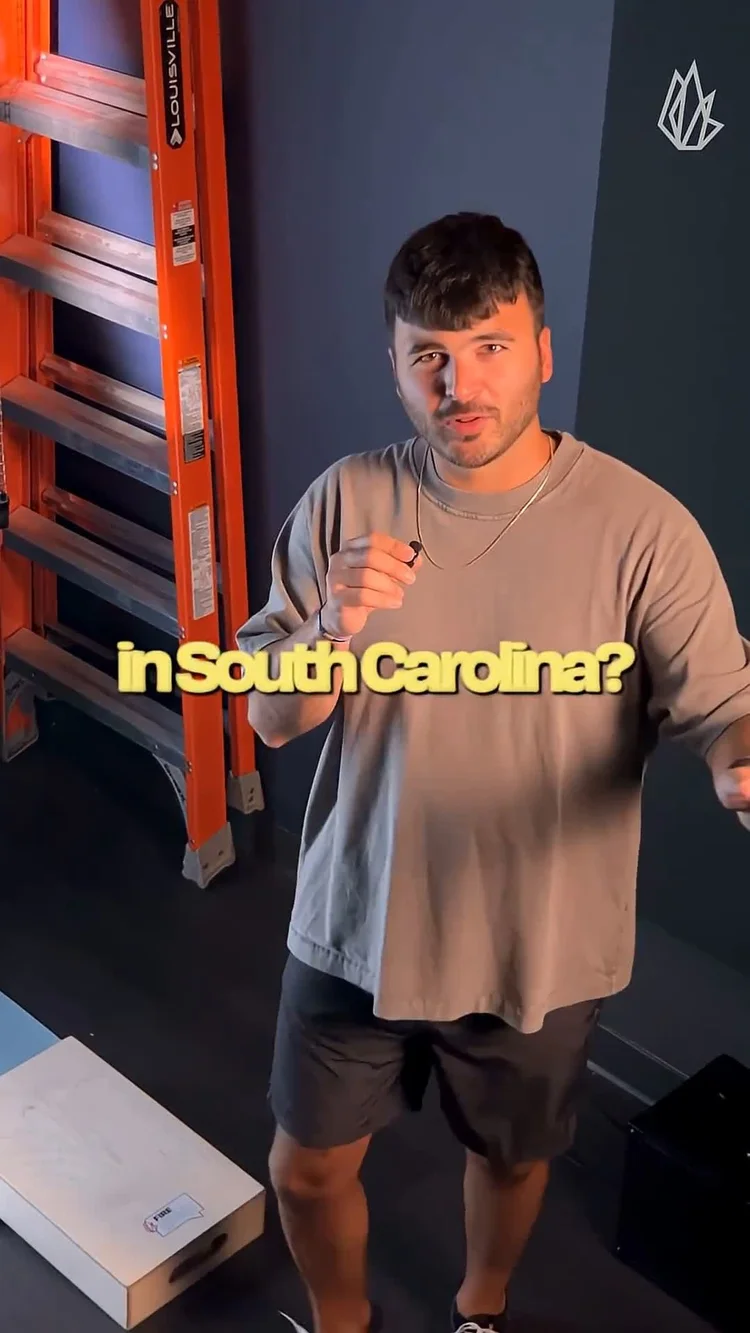
Tattooing Was Illegal in SC Until 2004?! — View Script
South Carolina Tattoos
Talking points
- Tattooing illegal until 2004
- Tattoo artists (not customers) fined $2500 and/or 1 year in prison for tattoos above shoulder
- Can’t open tattoo parlors within 1000ft of schools, churches, or playgrounds
- “Antithetical to free expression”
- Tiny Zaps filing lawsuit to challenge laws
- New York based company
- Wants to open pop-up in hotel in Charleston’s historic district
- Can’t because hella churches
- Illegal to tattoo face/neck